
What Is the WELL Coworking Rating? The One Tower Business Club Case
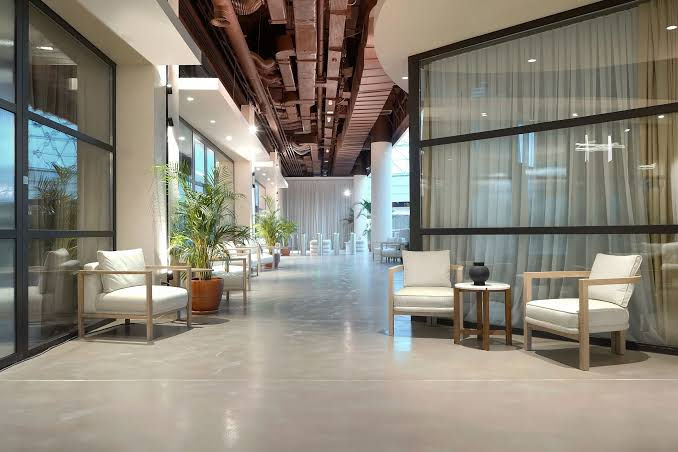
In August 2026, One Tower Business Club in Ankara achieved the WELL Coworking Rating, becoming the first flexible workspace operator in Türkiye to hold it. Alarnova served as consultant throughout the process.
This article covers what the rating is, what it gives an operator, and which practices at One Tower translated into points. The examples in the final section are drawn from the actual policy and technical documents submitted for the project.
What is the WELL Coworking Rating?

The WELL Coworking Rating is a designation developed by the International WELL Building Institute (IWBI) and administered in partnership with The Instant Group, created specifically for flexible workspace operators. It was announced at the end of 2024.
The rating is built on WELL v2: it uses the same feature codes, the same names and the same point values. What differs is its scope, which is limited to what the operator actually controls.
WELL Coworking Rating | WELL v2 Certification | |
Scope | The operator's own space and operations | The entire project area, building systems included |
Number of features | 42 feature parts across 10 concepts | Over 100 features across 10 concepts |
Total points | 53 | 110 |
Threshold | 23 points | 40 points (Bronze), tiered |
Preconditions | None | Mandatory preconditions in every concept |
Performance testing | None | Required (air, water, light, sound, thermal) |
Review | Independent documentation review | Documentation plus on-site performance verification |
Two differences matter in practice. First, performance testing is not required. The process rests on documentation rather than a measurement campaign, which both shortens the timeline and markedly reduces the cost.
Second, there are no preconditions. An operator can clear the threshold by earning points where it is already strong, instead of being ruled out before starting because of the mechanical infrastructure of a building it only leases.
This is what makes an international health standard a realistic target for coworking operators who occupy a leased floor — operators who cannot touch the façade, the central HVAC plant or the full water system.
How the process works?
Enrolment. The operator enrols the location that will carry the rating. Enrolment is per location — not per company or portfolio.
Strategy selection. The team decides which of the 42 feature parts to pursue. The real work lies in identifying what the operation already satisfies and choosing the points that reach the threshold with the least effort.
Implementation. Physical adjustments and operational policies are put in place for the gaps. Most points call for policy and operational discipline rather than construction.
Documentation. Each feature is submitted with its own evidence type: policy or operations schedule, technical document, letter of assurance (LOA), on-site photographs, ongoing data report or professional narrative. The relevant passages must be annotated or highlighted; unmarked evidence directly affects the score.
Independent review. The submission goes to third-party review. No performance testing or on-site measurement is requested.
Report and seal. The rating is finalised once the project team confirms the final report, and the seal for that year is issued.
The rating is valid for one year. To stay active and receive a seal each year, the enrolment must be renewed annually and all requirements must continue to be met.
What it gives an operator?
Evidence in front of corporate tenants. Companies with sustainability and employee health targets now look for documentation rather than claims when choosing an office. A third-party verified rating is a differentiator that counts directly in tenders and location shortlists.
Operations committed to paper. Because most points require policy, the operator ends the process holding a written cleaning protocol, a water quality monitoring routine, an emergency plan and nutrition rules. That is institutional memory which survives staff turnover.
Something concrete to tell members. Instead of "healthy office" language, the conversation turns to measured water analysis, labelled allergen information and filtration data. Member communication becomes specific.
Visibility. Operators who achieve the rating can promote it to prospective occupiers on The Instant Group's flexible workspace marketplace.
A step towards WELL v2. Since the same feature codes apply, a substantial part of the documentation can be reused if full WELL v2 certification is pursued later.
IWBI's 2022 study of WELL Certified offices reported a 28% increase in employee satisfaction and a 10-point rise in median productivity. Those findings relate to fully WELL Certified offices; no separate study exists yet for the Coworking Rating.

What was done at One Tower Business Club?
One Tower Business Club scored 27 points, clearing the 23-point threshold. The points spread across eight WELL concepts plus innovation. The examples below are the actual practices in the submission made to IWBI.
Water: quality measured and shared
Water was the most data-heavy part of the submission. Drinking water samples were taken by SEGAL, a laboratory accredited by TÜRKAK to TS EN ISO/IEC 17025. Sampling was carried out at the two dispensers closest to and farthest from the point where water enters the building, with point-of-use filters bypassed — measuring what comes through the plumbing rather than what the filter conceals.
Every parameter came in below the WELL thresholds: total coliform was zero at both points, lead and arsenic below 0.005 mg/L (threshold 0.01), and turbidity 0.67 and below 0.5 NTU (threshold 1.0).
For the transparency requirement, QR codes were placed beside the kitchenette sinks. Scanning one opens the most recent analysis report. Building management also keeps a record of filter technologies and cartridge replacement dates.
Nourishment: the concept that earned the most points
WELL v2 treats Sign Restaurant and Blue Lounge as two distinct food and beverage outlets. The restaurant offers at least four separate fruit options and four separate non-fried vegetable options; at Blue Lounge, fresh fruit and salads sit at eye level in self-serve displays.
The artificial ingredient restriction policy commits that none of the additives WELL restricts appear in any food or beverage served daily: artificial colourings (Blue 1, Red 40, Yellow 5), artificial sweeteners (aspartame, sucralose, acesulfame-K), nitrite and nitrate-based preservatives, BHA and BHT, and partially hydrogenated oils.
Mindful eating is a different kind of example. The policy gives every eligible employee a 60-minute daily meal break within their shift and requires that break to be scheduled so they can leave their workstation. It is a point written into the operating routine, not into the space.
Light: glazing specification and a daily routine
The floor-to-ceiling façade uses a 4-16-4 Şişecam Duosol T 50 unit, delivering 50% visible light transmittance and a solar factor of 0.27 — a balance that brings daylight in while limiting heat load.
The interesting part is on the shading side: the point comes not from having blinds but from how they are operated. The policy requires every shading device to be opened at least once, fully or partially, on each day the building is in use, and makes this a step in the daily opening procedure. After that, control sits with the occupant.
Materials: cleaning frequency and chemistry
The cleaning plan defines an eleven-person team (1 manager, 1 supervisor, 9 staff) and frequencies by area: kitchens are checked 20 times a day, restrooms cleaned continuously throughout the day, the fitness area after each use, and terraces reviewed 10 times a day.
On the product side, cleaning products containing ingredients with restricted GHS hazard codes are not used above 100 ppm. Compliance was documented through ISO 14024 Type I ecolabels or safety data sheets conforming to EU Regulation 2015/830 — which meant reviewing the safety data sheet of every single product.
Mind and community: points that require continuity
Mental health education is delivered at the OTBC Event Hall at least twice a year by a specialist psychologist who is a member of the community, with additional sessions on request. Biophilic design and the Urban Garden winter garden satisfy the connection to nature and connection to place features.
The occupant survey feature awards its point on condition that the survey is run annually and the results reported — a commitment that has to stay live through each renewal.
Air and movement
Ventilation runs on 100% outdoor air and passes through filtration. The smoke-free policy covers not only interiors but also the outdoor areas near entrances, operable windows and air intakes; electronic cigarettes fall within its scope. The 100 m² fitness area on the mezzanine satisfies the indoor activity space feature.
List of features achieved
Concept | Feature | Points |
Air | A02.1 & A02.2 Prohibit indoor and outdoor smoking | 2 |
Air | A13.1 Improve supply air | 1 |
Water | W05.1 Drinking water quality management | 2 |
Water | W05.2 Promote drinking water transparency | 1 |
Water | W07.3 Mold and moisture management plan | 1 |
Nourishment | N01.1 & N01.2 Provide and promote fruit and vegetable visibility | 1 |
Nourishment | N02.1 Provide nutritional information | 1 |
Nourishment | N02.3 Label sugar content | 1 |
Nourishment | N05.1 Limit artificial ingredients | 1 |
Nourishment | N07.1 Provide nutrition education | 1 |
Nourishment | N08.1 Support mindful eating | 2 |
Nourishment | N09.2 Label food allergens and intolerances | 1 |
Nourishment | N10.1 Provide meal support | 1 |
Light | L05.1 Implement daylight plan | 2 |
Light | L05.2 Integrate solar shading | 2 |
Movement | V08.1 Provide indoor activity spaces | 1 |
Mind | M02.1 Provide connection to nature | 1 |
Mind | M02.2 Provide connection to place | 1 |
Mind | M04.1 Offer mental health education | 1 |
Materials | X11.1 Improve cleaning practices | 1 |
Materials | X11.2 Select preferred cleaning products | 1 |
Community | C04.1 & C04.2 Annual occupant survey and reporting | 1 |
Community | C14.1 Promote emergency resources | 1 |
Innovation | I02.1 WELL Accredited Professional | 1 |

What the process taught us
The large majority of the 24 features achieved at One Tower called for written discipline rather than construction. The blinds were already there; what earned the point was writing their daily opening into the procedure. The cleaning team was already at work; the difference was recording the frequencies and the product criteria.
That is the real message for flexible workspace operators: the rating measures not whether a building has been rebuilt, but whether the work already being done can be documented. The starting point is usually a gap analysis — which features the operation already satisfies, and which can be added with the least effort to reach the threshold.
Alarnova led credit strategy and point planning, documentation production, IWBI submission management and the drafting of operational policies for One Tower Business Club. If you are considering a similar process, get in touch.
Resources
One Tower Business Club Becomes First Flexible Workspace Operator in Turkey to Achieve the WELL Coworking Rating, IWBI, September 2, 2026
WELL Coworking Rating, IWBI — feature list, point allocation and threshold
WELL Coworking Rating, The Instant Group
WELL, the WELL Coworking Rating and related logos are trademarks or certification marks of International WELL Building Institute pbc. One Tower Business Club's WELL Coworking Rating is valid for one year and requires annual renewal.


Comments